What is Well Abandonment (Decommissioning)?
A well abandonment, also known as well decommissioning, is the proper process of taking a water well that is no longer in use and permanently sealing it in a way that safely protects groundwater, prevents contamination, and removes physical hazards. It involves removing all equipment (pump, piping, etc.), filling and sealing the well casing, and installing a secure cap or plug so that surface water, contaminants, or anything from above ground cannot enter the well or aquifers. The work must be performed by a licensed well driller or pump installer under Nebraska law and in accordance with rules set by the Nebraska Department of Health and Human Services.
Why Is Well Abandonment Needed?
- Protect Groundwater Quality
Over 90% of Nebraskans depend on groundwater for drinking and other uses. Abandoned or illegal wells (wells no longer maintained or that fail to meet current construction/maintenance standards) can act as direct pathways for contaminants—chemicals, nutrients (fertilizer), livestock waste, petroleum products, and surface runoff—to reach aquifers without the natural filtering soils provide. Once groundwater is contaminated, cleanup is difficult, often expensive, or sometimes not possible. - Safety Hazards
Open or unsecured wells are dangerous. Children, animals, or people can fall into them. Some wells are large, deep, or hidden (overgrown, covered or under debris)—they can be serious physical hazards. - Legal Requirement
Nebraska regulations require that wells no longer in use be decommissioned or otherwise brought into compliance. It is illegal to let wells degrade into disrepair without sealing them properly. The law also mandates that licensed contractors perform abandonment. - Prevent Liability and Long-Term Costs
If a well is left abandoned improperly, it can lead to more serious liabilities later—contamination of water supplies, regulatory fines, or expensive remediation. Cost-share programs are often available to help landowners cover the costs of abandonment. It’s better to address the issue now rather than dealing with potential damage later.
What Landowners Should Know
- Always hire a licensed well driller or pump installer—state law requires it.
- Follow the standard steps: removal of equipment, filling and sealing the well (often with materials like bentonite or grout), installing a surface seal or cap, and disposing properly of excavated materials.
- Before work begins, contact the Lower Niobrara NRD for guidelines and cost-share assistance.
- The owner will need to file the Lower Niobrara NRD well abandonment application and report the decommissioning so the well is officially recorded as abandoned.
COST SHARE
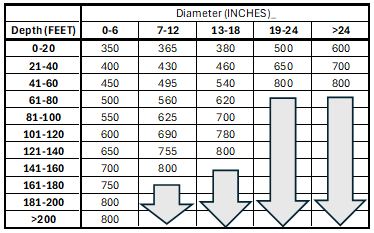
- 65% of materials and labor
- Max of $800 per well
- Max of $1,600/cooperator/year
- Max cost share based on well dimensions as shown
REQUIREMENTS
- Submit application to the District for approval.
- Cooperator is responsible for removal of obstructions (pipe, concrete, towers, etc.) at own expense.
- A licensed well driller or pump installer must seal the well.
- Cooperator shall notify the District before work begins.
- NRD can observe the sealing.
- Cooperator shall submit copy of paid invoices to receive cost share payment.
- Well Abandonment Application